There are plenty of other writers that combine stories so old they're in the bloodstream and out of copyright. There's something deeply satisfying about taking the bare bones of a fairy tale--two or three pages of irrational magic, characters that are archetypal cut-outs, and usually an act or two of age-inappropriate violence--and seeing it fleshed out into a novel.
One of my favorite writers is Mary Renault for her skill with this kind of adaptation. Renault was a serious scholar, and has an uncanny ability to abolish a modern-day context and make you half-consider worshipping the old gods. My favorite of her books is The King Must Die.

This is a retelling of Theseus and the Minotaur. Thinking of the version in my beloved Dulaire's Greek Mythology, my biggest impression from that story is the winding through the Labyrinth and the frail little trail of thread. The fight with the beast barely seemed like the point, but the idea of being entombed underground stuck with me. In Renault's version, the story is completely absorbing, but more than that, the characters are as rich and relatable as their counterparts from a modern setting. What they do is completely rational given that gods watch and walk among them. Renault never falls into the fatal historical fiction trap of swaddling a character in modern political or social sensibilities. Her people and plots have their own context and rules, and they abide by that, not what would make the reader feel comfortable or righteous. It makes for unsettling and disorienting reading sometimes. Who would I be and what would I think if I were in a Renault novel, and what choice do I really have in who I am now?
All that plus bull-dancing!
Another author who has had wild success with well-trod plot and themes is Suzanne Collins of the Hunger Games hegemony.
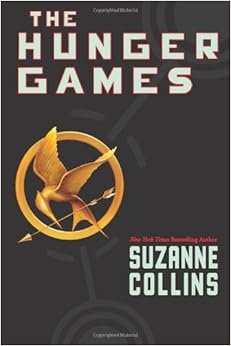
I don't know why I'm bothering to add an image here, it's burned into your brain whether you read the books or not. I enjoyed the books very much, I think on the basis of the compelling premise and the voice of the heroine, the super-human but also extremely human and hubristic Katniss. Collins borrowed heavily for her plot, but made the wise move of shifting the setting to the future instead of the past, and her character's voice is all her own.
But her influences are evident. A lot of critics point to the similarities to the 2000 Japanese cult classic Battle Royale.
But to come full circle yet again, Collins also borrowed from a much more obscure source: Mary Renault's The King Must Die. This is the source of the concept of a conquering society demanding a tribute, and also the show-stealing scene of the hard to like Katniss volunteering to take the place of her younger sister.
Theseus makes a similar sacrifice, based not on the desperate need to save someone beloved, but in a move that is both politically expedient for his royal father and in keeping with his honor as a man. He becomes a shrewd leader, bringing together a team that survives against the odds, and, like Katniss, using his position to overthrow a tyrant.
Collins took some great but under-the-radar source material and turned it into an empire.
***
I like hearing the same story over and over, with variations on a theme. When I was a kid, the repetition was key, now I'm more interested in the variations and transmutations. There's something specifically satisfying about taking a familiar story and bending it in a different direction, with another emphasis and a richer world. It's like reconnecting with a childhood friend and realizing they're much weirder, smarter, funnier, and sicker than you knew they were when you were both in kindergarten.

No comments:
Post a Comment